Lesson/Aug 14, 2026/10 min
The four yugas
Satya, Treta, Dvapara, Kali. How dharma thins across ages, and why remembering who we are is the work of the thin age.
A yuga is an age of the world. The usual set is four. Satya (also Krita), Treta, Dvapara, Kali. They are a way of talking about how truth, and the memory that carries it, holds or thins. They are not a lab clock. Puranic counting gives them the ratio 4:3:2:1, with Kali at 432,000 years and a full cycle, a mahayuga, at 4,320,000. Treat those numbers as a model, not as astronomy.
The picture that orients is simpler than the arithmetic. Dharma is said to stand on four legs in Satya, then three, then two, then one. Each age forgets more. Remembering who we are is what you do when the store is no longer automatic.
Satya Yuga
Also called Krita: what is done is complete. Speech, act, and inner life still match. The inner instrument is quiet enough that citta, manas, buddhi, and ahamkara do not have to fight each other. People do not need a journal to recall the four aims. They live them.
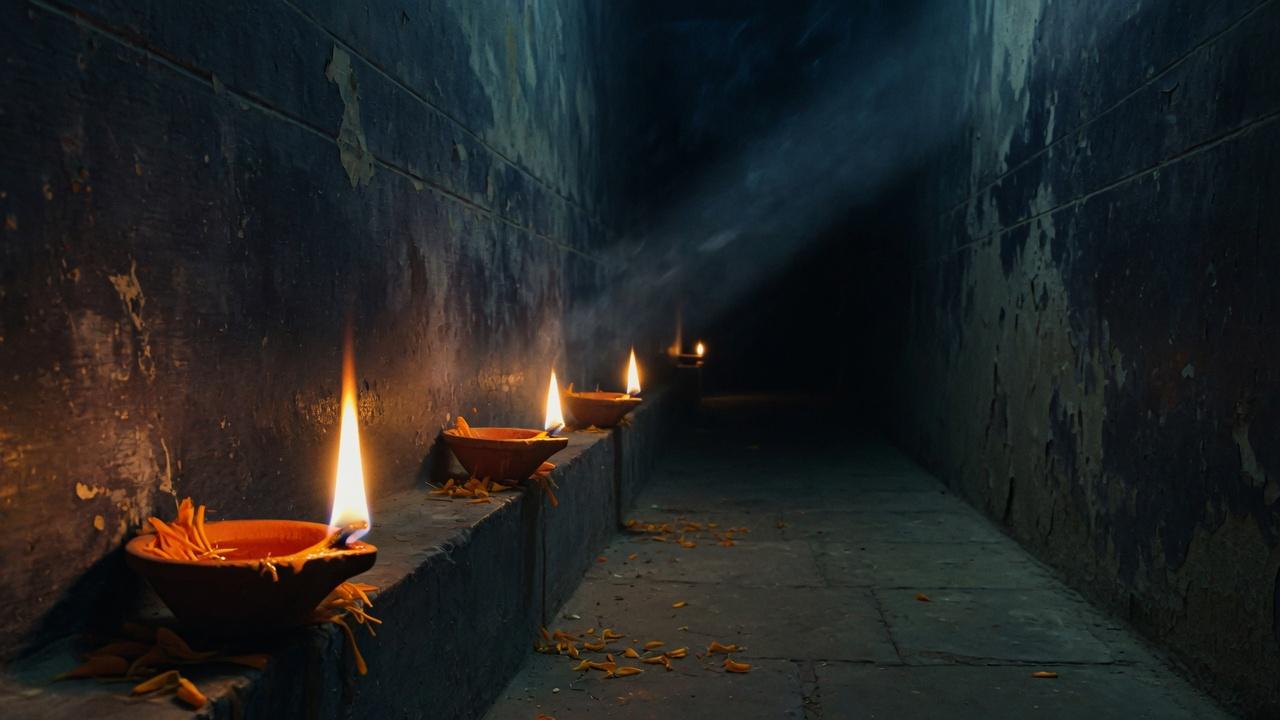
If you need an image: a lamp that does not have to be guarded.
Treta Yuga
A third of the fullness is gone. What once happened by nature now needs form: ritual, vow, kingship. The Ramayana is traditionally placed here. Exile becomes a teacher. A people still remembers, but it has to keep the vow on purpose.
Dvapara Yuga
Two legs. Kin, law, and desire collide. The Mahabharata is traditionally placed here. Memory still works, but it has to be argued for. Hard cases stop being rare. Buddhi is under load.
Kali Yuga
One leg. The weather is forgetting: short attention, loud identity, thin stores. Life is shorter in the old descriptions, and so is patience. This is the age most readers are told they inhabit.
The useful claim is not despair. In a thin age, the path is also thinner: a name, a practice, a remembered map. You do not wait for Satya to come back before you keep dharma, earn without becoming only your earning, or tell the four varnas apart from a ranking sport.
Why this sits with the other fours
The inner instrument is how a person remembers. The yugas are how a world forgets. The four aims and the division of labor are what you are trying not to lose. Read together they are one sentence: the store thins, so the map has to be walked on purpose.
That is a philosophy of time, not a religion of apocalypse. Keep the names. Do not use them to excuse cruelty, or to wait out your own life.