Lesson/Jul 18, 2026/8 min
How dharma shows up in a life
After the four aims, a closer look at dharma as it is actually lived: your work, your house, your people, the long memory.
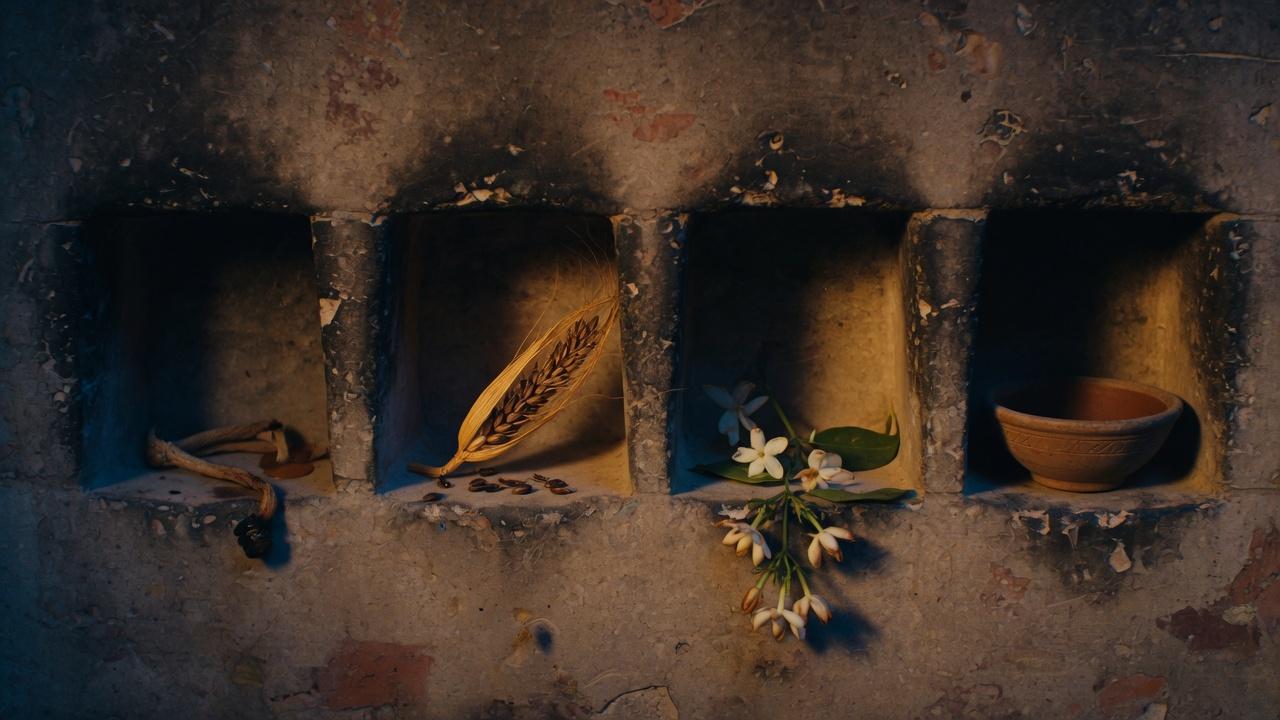
Once you have the four aims, dharma still needs a smaller map. People use the word for a religion, for manners, for identity, and for a fight on television. That is too much for one syllable. In a way of life it shows up in four places.
Svadharma
Svadharma is the work that is yours. Not the work that photographs well. Not the work your cousin chose. The particular duty that your nature, station, and hour actually ask.
A civilization of interchangeable people is just a crowd. The first useful memory is noticing you are not a spare part.
Kula dharma
The house is the first school. Kula dharma is the duty of lineage: care for the living, some regard for the dead, and the habit of handing on something that is not only money.
This is not a demand that every family look the same. It is a reminder that if formation is left entirely to the market, the state, and the feed, the house gets thin.
Rashtra dharma
A people is more than a headcount. Rashtra dharma is the duty of belonging. Keep the commons inhabitable. Do not treat your own as an embarrassment. Act together when the week is not polite.
Unity here is not sameness. It is the ability to stand in one line when the shared thing is under pressure.
Sanatana dharma
What is sanatana is not frozen. It is the through-line. The memory that lets a people remain themselves across fashion, conquest, and self-forgetfulness.
If the first three are how you live this decade, this is why the decade still has a name.
The four aims tell you what a life is for. These four show you where dharma sits in the week. You need both.